Introduction
Most investors think rental value is driven by just two things.
Location and price. But there’s a third factor that quietly makes a massive difference.
Amenities.
In today’s market, tenants are not just renting space.
They’re choosing:
- Convenience
- Experience
- Efficiency
And the right amenities can significantly increase:
- Rental income
- Occupancy rates
- Tenant retention
Let’s break down the amenities that actually impact rental value and which ones are just marketing fluff.
1. Parking Availability (Underrated but Critical)
This is one of the most practical yet overlooked factors.
In commercial real estate, parking directly impacts usability.
Why it matters
- Employees need daily parking
- Clients need easy access
- Lack of parking reduces tenant interest
Properties with:
- Dedicated parking
- Ample visitor parking
Command higher rents and better demand.
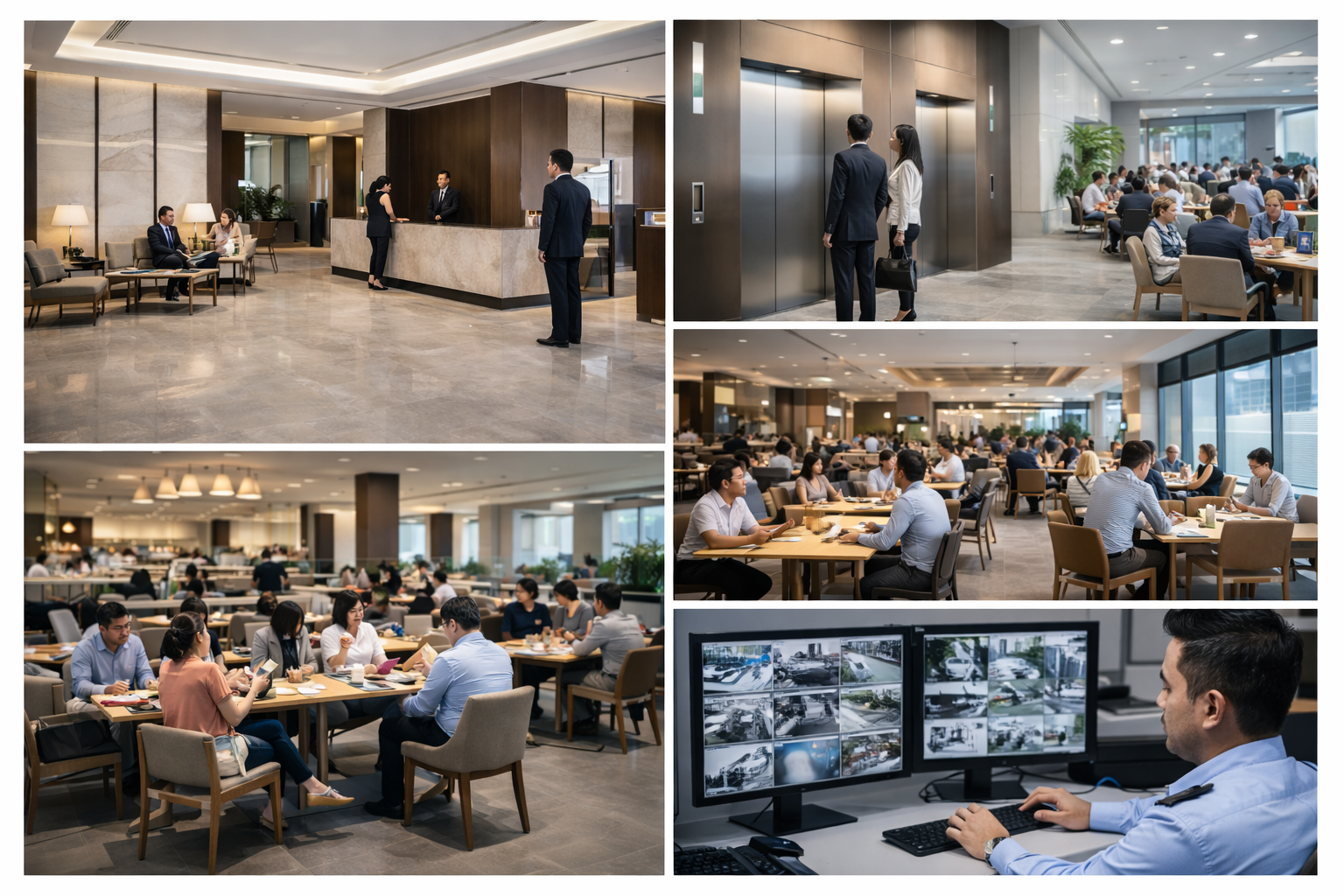
2. High-Speed Elevators and Accessibility
In modern commercial buildings, time is everything.
Slow elevators = poor experience.
Impact
- Delays during peak hours
- Frustration for employees
- Reduced building efficiency
Premium buildings invest in:
- Multiple high-speed elevators
- Smart access systems
This directly enhances tenant satisfaction and willingness to pay more.
3. Power Backup and Infrastructure Reliability
This is non-negotiable.
Businesses cannot afford downtime.
Essential amenities
- 100 percent power backup
- Reliable water supply
- Strong internet infrastructure
Properties lacking these:
- Struggle to attract quality tenants
- Face higher vacancy
Reliability equals premium positioning.
4. Security Systems and Access Control
Security is no longer optional.
Especially in commercial environments.
Key features
- CCTV surveillance
- Access control systems
- Security personnel
For tenants, this means:
- Safety
- Data protection
- Controlled access
Better security leads to:
- Higher trust
- Better tenant profiles
- Higher rental value
5. Modern Lobbies and First Impressions
This might seem cosmetic.
It’s not.
The lobby sets the tone for the entire building.
Why it matters
- Clients form first impressions instantly
- Reflects brand image of tenants
- Influences perceived value
A premium lobby can:
- Justify higher rents
- Attract better companies
6. Co-Working and Shared Spaces
Work culture has changed.
Companies now value:
- Flexibility
- Collaboration
Buildings that offer:
- Co-working zones
- Meeting rooms
- Shared lounges
Have a strong advantage.
These spaces:
- Increase usability
- Reduce tenant setup costs
- Improve overall appeal
7. Cafeteria and Food Options
Convenience drives retention.
Employees prefer buildings where:
- Food is easily accessible
- Breaks are comfortable
Impact
- Better employee satisfaction
- Higher tenant retention
- Increased demand
Even a basic cafeteria can significantly improve property appeal.
8. Green Spaces and Wellness Amenities
This is becoming a major differentiator.
Modern tenants care about:
- Work environment
- Employee well-being
Amenities like:
- Landscaped areas
- Open spaces
- Natural ventilation
Add real value.
These are no longer “luxury” features. They are becoming expected standards.
9. Smart Building Technology
Technology is redefining commercial spaces.
Examples
- Smart access cards
- Automated lighting
- Energy-efficient systems
These reduce:
- Operational costs
- Energy consumption
And increase:
- Efficiency
- Tenant satisfaction
10. Location-Based Amenities (The Multiplier Effect)
Sometimes, the most valuable amenities are not inside the building. But around it.
External amenities
- Restaurants
- Banks
- Public transport
- Retail outlets
These significantly enhance:
- Daily convenience
- Tenant experience
And ultimately:
- Rental value
11. What Doesn’t Really Add Value
Not all amenities justify higher rent. Some are just marketing features.
Examples:
- Over-designed common areas
- Unused luxury features
- Low-utility add-ons
If an amenity doesn’t improve:
- Productivity
- Convenience
- Experience
It doesn’t drive real value.
12. How Smart Investors Evaluate Amenities
Instead of looking at a checklist, smart investors ask:
Does this amenity:
- Improve tenant experience
- Increase usability
- Reduce operational friction
If yes, it adds value.
If not, it’s just a decoration.
13. Why Amenities Impact Long-Term Returns
Amenities don’t just affect rent today.
They impact:
- Occupancy rates
- Tenant retention
- Property reputation
Better amenities lead to:
- Lower vacancy
- Stable income
- Higher appreciation
14. How properties.market Helps Identify High-Value Assets
Not all properties with amenities are equal.
The key is identifying:
- Functional amenities
- Relevant features
- Real impact on tenants
Platforms like properties.market help investors:
- Compare properties effectively
- Evaluate real rental potential
- Identify assets with strong long-term demand
So you’re not just buying a property.
You’re buying an income-performing asset.
Conclusion
Amenities are no longer optional.
They are a core part of what defines rental value.
The difference between an average property and a high-performing one often comes down to:
- Practical convenience
- User experience
- Operational efficiency
As a buyer or investor, your job is not to look for more amenities.
It’s to look for the right ones.
Because in commercial real estate, tenants don’t pay for space.
They pay for how well that space works for them.
And that’s where real value lies.
They are over-marketed.
Signs of hype:
- Excessive advertising
- Unrealistic promises
- Prices rising without demand
These areas often:
- Plateau quickly
- Offer limited upside
Undervalued opportunities are usually quiet, not loud.
9. Use Data, Not Assumptions
Smart investors don’t rely on gut feeling.
They look at:
- Price trends
- Rental yields
- Occupancy rates
- Infrastructure plans
Data reveals patterns that intuition misses.
10. Think in Terms of Time Horizon
Undervalued properties don’t deliver instant results.
They require:
- Patience
- Long-term perspective
If you’re expecting quick returns, you’ll miss these opportunities.
But if you’re willing to wait, the upside can be significant.
11. Micro-Market Analysis is Key
City-level analysis is too broad.
Real estate works at a micro-market level.
Two areas in the same city can have completely different trajectories.
Focus on:
- Street-level connectivity
- Proximity to business hubs
- Surrounding developments
12. Follow Where Jobs Are Moving
Jobs drive demand and demand drives prices.
Look for:
- IT expansions
- Industrial corridors
- Corporate relocations
Where jobs go, real estate follows.