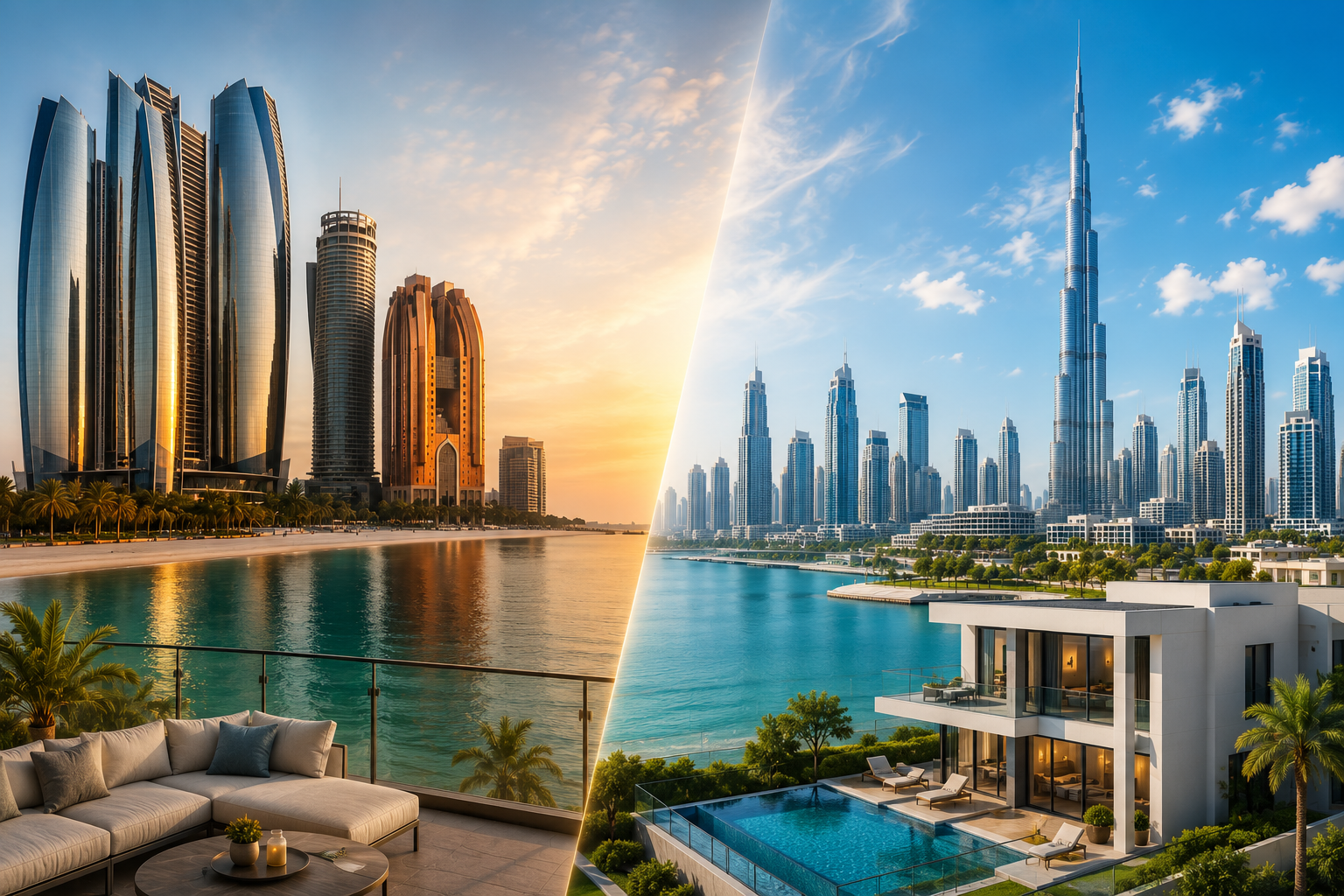
Why Abu Dhabi is better than Dubai is a question that produces strong opinions on both sides, and both cities have genuine strengths. But for a specific type of property investor and resident, Abu Dhabi consistently delivers advantages that Dubai simply cannot match. This is not about which city is more famous. It is about which city makes more financial and lifestyle sense for your specific goals. This guide presents the honest case for Abu Dhabi across yields, stability, lifestyle, and long-term value in 2026.
The Core Argument for Abu Dhabi
Dubai gets the headlines. Abu Dhabi holds the oil wealth. That fundamental difference shapes everything about how the two cities function as property markets and as places to live.
Abu Dhabi is the capital of the UAE and the seat of federal government. It houses the country’s sovereign wealth funds, its largest national oil company, and its most significant government institutions. The employment base here is concentrated in stable, well-paying sectors including government, oil and gas, healthcare, and finance. This creates a tenant pool that is inherently more stable than Dubai’s more commercially driven, tourism-influenced, and transient professional base.
For property investors, a stable employment base means more predictable rental demand, lower tenant turnover, and fewer extended void periods between occupancies. These practical factors directly improve net yield outcomes even when headline yield percentages look comparable between the two markets.
Government Stability and Policy Certainty
Abu Dhabi’s property market is shaped by deliberate, long-term government policy in a way that Dubai’s more commercially driven market is not. The Abu Dhabi government has consistently invested in master-planned community development, infrastructure, and cultural institutions that increase the long-term desirability of the emirate as a place to live and work.
This policy-driven approach to urban development reduces the speculative volatility that can affect more commercially reactive markets. Abu Dhabi’s property prices have historically shown less dramatic upswings and downswings than Dubai’s, which suits investors who prioritise capital preservation alongside yield rather than chasing maximum short-term appreciation.
For investors building a balanced multi-emirate portfolio, the guide on how to build a property portfolio in UAE from scratch explains how Abu Dhabi’s stability profile complements higher-volatility positions elsewhere in the UAE.
Yield Performance in Key Abu Dhabi Communities
Abu Dhabi’s yields are often underestimated by investors who default to Dubai comparisons. The capital’s key investment communities deliver net yields that are fully competitive with Dubai’s established zones, and in some communities considerably stronger.
Al Reem Island, covered in detail, delivers net rental yields of 6.5 to 8 percent from a professional tenant base concentrated in finance, government, and healthcare. This outperforms many established Dubai communities including Business Bay and Downtown Dubai on a net yield basis at equivalent entry prices.
Yas Island delivers 6 to 7 percent net yields with the additional dimension of tourism-driven short-term rental potential that most Dubai communities cannot replicate at the same price point. Saadiyat Island delivers 5 to 6.5 percent for buyers who prioritise prestige and cultural exclusivity, comparable to Dubai Marina and Downtown Dubai yields at a similar address tier.
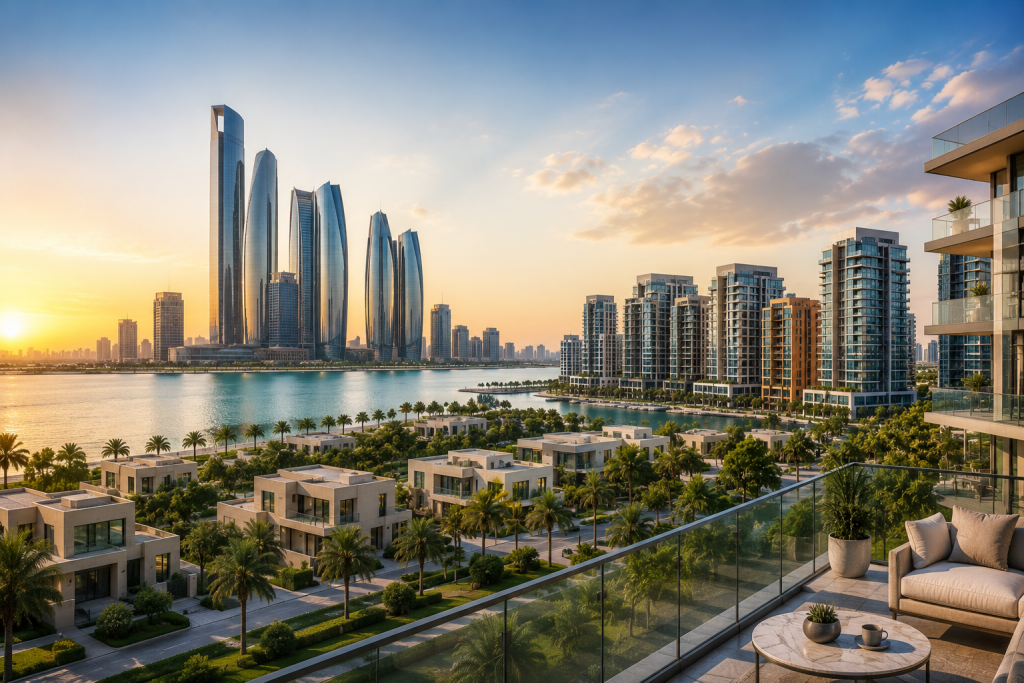
Al Raha Beach provides waterfront living at entry prices that would buy a modest inland apartment in many Dubai communities, with net yields of 6 to 7 percent supported by family tenant demand and airport corridor connectivity.
For a full comparison of how Abu Dhabi communities perform against Dubai across every yield metric, the UAE rental yield guide for 2026 provides the complete data-driven breakdown.
Cost of Living: Abu Dhabi Is More Affordable Than Most People Think
One of the most persistent myths about Abu Dhabi is that it costs more to live there than Dubai. For most residents, the opposite is true.
Rental costs in Abu Dhabi’s mid-market communities sit below comparable Dubai neighbourhoods. A one-bedroom apartment in Khalifa City rents for AED 45,000 to AED 70,000 annually, versus AED 75,000 to AED 110,000 for a comparable unit in Jumeirah Village Circle.

Daily living costs including groceries, dining, and leisure are broadly similar between the two cities, but Abu Dhabi’s lower density and less commercially intense urban character means residents face less of the premium pricing that accumulates in Dubai’s most popular lifestyle zones.
For families specifically, Abu Dhabi’s more spacious urban layout, lower traffic density in most areas compared to Dubai’s peak hours, and strong access to international schools at various price points make it a genuinely compelling alternative that is less stressful on a day-to-day basis.
Cultural Richness and Lifestyle Quality
Abu Dhabi has invested more deliberately in cultural infrastructure than any other UAE emirate. The Louvre Abu Dhabi on Saadiyat Island, covered in the Saadiyat Island luxury living guide , is one of the most significant cultural institutions in the region. The Zayed National Museum and further planned cultural destinations are part of a long-term vision that is steadily being delivered.
This investment in culture gives Abu Dhabi a residential character that is genuinely distinct from Dubai’s more commercial and entertainment-driven identity. Residents who want world-class museums, art, and academic institutions as part of their daily environment find Abu Dhabi consistently superior to Dubai in this regard.
Yas Island adds the entertainment dimension for residents who want access to theme parks, Formula 1 racing, a marina, and a resort-style lifestyle, as explored in the Yas Island vs Saadiyat Island comparison . The combination of cultural infrastructure on Saadiyat and entertainment infrastructure on Yas gives Abu Dhabi a breadth of lifestyle offering that Dubai’s more homogeneous commercial entertainment model cannot fully replicate.
Abu Dhabi’s Emerging Markets Are Earlier in Their Cycle
While Dubai’s most famous communities have already completed most of their appreciation cycle, Abu Dhabi’s emerging markets are at an earlier stage of development, which means the opportunity for early-mover appreciation still exists across several communities.
Communities like Khalifa City offer villa living at prices significantly below comparable Dubai communities. Masdar City is building a unique innovation-economy positioning that has no direct Dubai equivalent. Al Raha Beach offers waterfront living at entry prices that would only buy a mid-floor inland apartment in many established Dubai zones.
The emerging market landscape in Abu Dhabi is explored in detail in the guide on emerging property markets in Abu Dhabi , which identifies the specific communities currently showing the clearest early-stage growth signals.
Frequently Asked Questions (FAQ)
Is Abu Dhabi cheaper to live in than Dubai?
For most residents, yes. Rental costs in Abu Dhabi’s mid-market communities sit below comparable Dubai neighbourhoods across most unit types and sizes. Daily living costs are broadly similar between the two cities, though Abu Dhabi’s lower commercial density means residents encounter fewer premium-priced lifestyle zones than Dubai’s most popular entertainment districts.
Which has better rental yields, Abu Dhabi or Dubai?
Abu Dhabi’s key investment communities like Al Reem Island deliver net yields of 6.5 to 8 percent, which competes directly with and in some cases outperforms established Dubai communities like Business Bay and Downtown Dubai at equivalent entry price levels. Dubai’s mid-market communities like Jumeirah Village Circle can deliver slightly higher headline yields, but Abu Dhabi’s more stable tenant profile often produces better net outcomes once void periods and turnover costs are properly factored in.
Is Abu Dhabi property market more stable than Dubai?
Generally yes. Abu Dhabi’s property market has historically shown lower price volatility than Dubai’s, reflecting its more policy-driven development approach and employment base concentrated in stable government, oil, and healthcare sectors rather than commercially reactive tourism and financial services.
Is Abu Dhabi better for families than Dubai?
For many families, yes. Abu Dhabi offers more spacious urban environments, lower peak-hour traffic density in most areas, strong access to international schools, and a more culturally rich environment with world-class museums. Families who prioritise cultural infrastructure and a quieter pace of life alongside quality schooling often prefer Abu Dhabi over Dubai’s denser, more commercially driven lifestyle zones.
Can foreigners buy property in Abu Dhabi?
Yes. Abu Dhabi has designated freehold zones where foreign nationals can purchase property with full and permanent legal ownership without requiring UAE residency. Key freehold communities include Al Reem Island, Yas Island, Saadiyat Island, Al Raha Beach, and Khalifa City.
Abu Dhabi is not better than Dubai for everyone. But for investors who prioritise yield stability over speculative appreciation, residents who want cultural richness over commercial entertainment, and families who want space and quality of life over urban density, Abu Dhabi consistently delivers a stronger overall proposition than its more famous neighbour.
To explore current property opportunities across Abu Dhabi’s leading communities, browse properties for sale in Abu Dhabi and review the how to identify profitable real estate deals in the UAE guide to build a clear framework for evaluating Abu Dhabi against Dubai before committing capital to either market.