Buying property in Dubai is an exciting milestone, whether you’re purchasing your first home, investing in a rental property, or expanding your real estate portfolio. However, owning a property is only complete once you receive the title deed, the official legal document that confirms your ownership. Understanding the Title Deed Process in Dubai is essential for every buyer, as it protects your investment and ensures the property is legally registered in your name.
Dubai has built one of the world’s most transparent and efficient real estate registration systems. Through the Dubai Land Department (DLD), buyers can complete ownership transfers securely, whether purchasing a ready property or an off-plan development. The process has also become increasingly digital, allowing many transactions to be completed through authorized trustee offices and online government platforms.
This guide explains everything you need to know about the Title Deed Process in Dubai, including how title deeds are issued, the documents required, registration fees, timelines, and common mistakes to avoid.
What Is a Title Deed?
A title deed is the official legal certificate issued by the Dubai Land Department (DLD) confirming that a property has been legally registered in the owner’s name.

The document serves as proof of ownership and contains important details such as:
- Property owner’s name
- Property location
- Plot number
- Unit number
- Property type
- Property size
- Ownership details
- Registration information
Once the title deed is issued, the owner gains full legal rights over the property, including the ability to sell, lease, transfer, mortgage, or pass the property to heirs in accordance with UAE laws.
Without a registered title deed, ownership cannot be legally recognized.
Why Is a Title Deed Important?
A title deed is far more than an ownership certificate – it is the legal foundation of every property transaction in Dubai.
It provides buyers with legal protection by confirming that ownership has been officially transferred and recorded by the Dubai Land Department. It also reduces the risk of disputes by clearly identifying the property’s owner and the exact details of the asset.
A title deed is required for several important purposes, including:
- Selling the property
- Applying for a mortgage
- Leasing the property
- Property inheritance
- Visa applications linked to qualifying property investments
- Property valuation
- Ownership verification
Whether you purchase a studio apartment, villa, townhouse, or commercial property, obtaining the title deed is the final and most important step in securing your investment.
Who Issues Title Deeds in Dubai?
All title deeds in Dubai are issued by the Dubai Land Department (DLD), the government authority responsible for regulating and registering real estate transactions within the emirate.
The Dubai Land Department oversees:
- Property ownership registration
- Ownership transfers
- Mortgage registration
- Real estate documentation
- Property transaction records
- Developer registration
- Trustee office services
Over the years, the DLD has introduced digital services that have significantly improved the efficiency of property registration. Many buyers can now complete parts of the registration process electronically through approved channels, reducing paperwork and processing times.
Types of Title Deeds in Dubai
Depending on the type of property being purchased, buyers may receive different ownership documents during various stages of the transaction.
Title Deed for Ready Properties
For completed properties, the Dubai Land Department issues the final title deed once ownership has been officially transferred, and all registration requirements have been completed.
This document confirms full legal ownership.
Oqood Certificate for Off-Plan Properties
When purchasing an off-plan property directly from a developer, buyers initially receive an Oqood Certificate rather than a final title deed.
The Oqood system records ownership during the construction phase and protects buyers by registering the transaction with the Dubai Land Department.
After construction is completed, the project receives all necessary approvals, and the developer hands over the property, the Oqood registration is converted into the final title deed.
Step-by-Step Title Deed Process in Dubai
Understanding the registration journey helps buyers avoid delays and ensures all legal requirements are completed correctly.
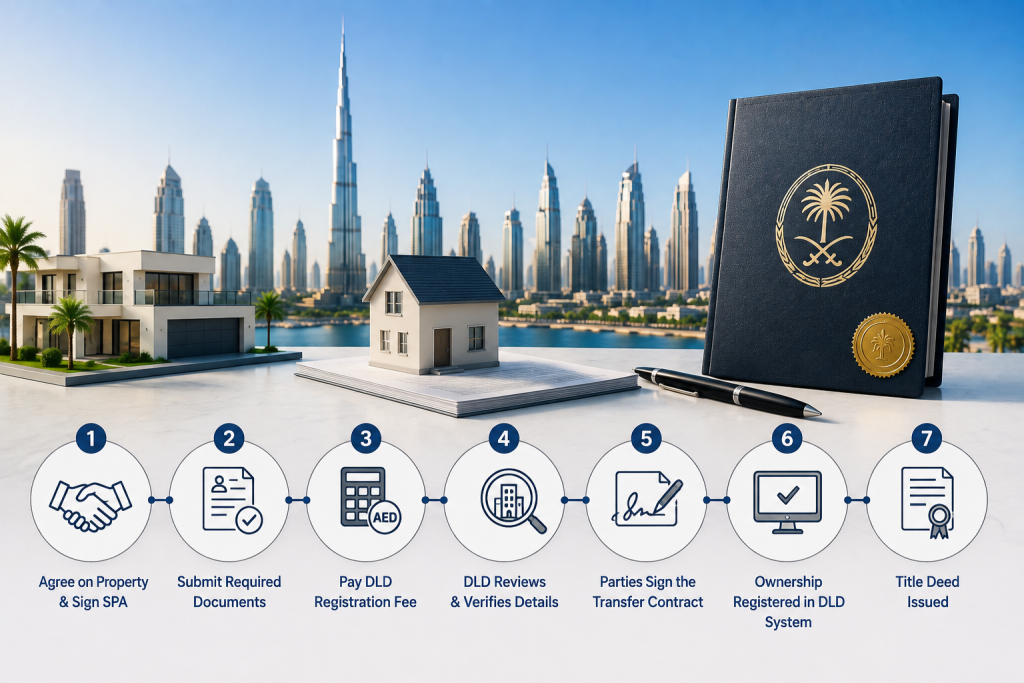
Step 1: Sign the Sale Agreement
The process begins when both buyers and sellers agree on the purchase terms.
For secondary market transactions, the parties usually sign a Memorandum of Understanding (Form F) outlining:
- Purchase price
- Payment terms
- Property details
- Responsibilities of both parties
- Transfer conditions
- Completion date
If the buyer is purchasing directly from a developer, the developer’s Sales and Purchase Agreement (SPA) replaces this stage.
Step 2: Obtain a No Objection Certificate (NOC)
For resale properties, the seller normally obtains a No Objection Certificate (NOC) from the property developer.
The NOC confirms that:
- All service charges have been paid.
- The developer has no objections to the ownership transfer.
- The property is eligible for transfer.
Without this document, ownership cannot usually be transferred through the Dubai Land Department.
Some developers issue the certificate within a few days, while others may require additional verification before approval.
Step 3: Prepare the Required Documents
Before visiting a DLD Trustee Office or completing the digital registration process, both parties must prepare all required documentation.
Typical documents include:
- Original passport
- Emirates ID (if applicable)
- Visa copy (if applicable)
- Signed sale agreement
- Original title deed (for resale properties)
- No Objection Certificate (NOC)
- Mortgage clearance documents (if applicable)
- Power of Attorney (if someone is acting on behalf of the buyer or seller)
Having complete documentation helps prevent unnecessary delays during registration.
Step 4: Property Transfer Appointment
Once all documents have been verified, the buyer and seller (or their authorized representatives) attend an approved DLD Trustee Office to complete the ownership transfer.
During this stage:
- Documents are reviewed.
- Identity verification takes place.
- Government fees are paid.
- Ownership details are confirmed.
- The transfer request is submitted to the Dubai Land Department.
For financed purchases, representatives from the buyer’s bank may also participate in the transfer process to complete mortgage-related formalities.
At this stage, the legal ownership transfer is initiated. Once the Dubai Land Department completes its verification and registration procedures, the buyer becomes the official registered owner of the property.
Step 5: Pay the Dubai Land Department (DLD) Registration Fees
After the ownership transfer documents have been verified, the next step in the Title Deed Process in Dubai is paying the applicable government registration fees.
The Dubai Land Department (DLD) charges registration fees for every property transfer. In most transactions, the buyer is responsible for these costs unless a different arrangement has been agreed upon in the sale contract.
Typical costs associated with property registration include:
- Dubai Land Department transfer fee
- Registration administration fees
- Trustee Office service fees
- Mortgage registration fee (if applicable)
- No Objection Certificate (NOC) charges (for resale properties)
The total amount payable depends on factors such as the property’s purchase price, whether financing is involved, and the type of transaction.
Because fees may change over time, buyers should always verify the latest charges before completing the transfer.
Step 6: Ownership Registration with Dubai Land Department
Once the required fees have been paid, the Dubai Land Department completes the legal ownership registration.
During this stage, DLD officials verify:
- Buyer and seller information
- Property ownership history
- Payment confirmation
- Mortgage details (if applicable)
- Legal documentation
- Developer approvals
The ownership information is then entered into Dubai’s official real estate registry.
This registration is the point at which ownership is legally transferred to the buyer.
Dubai’s digital property registration system has significantly reduced processing times while improving transparency and security for buyers and sellers.
Step 7: Title Deed Issuance
After successful registration, the Dubai Land Department issues the official Title Deed in the buyer’s name.
The title deed confirms that:
- The buyer is the legal owner.
- The property has been officially registered.
- Ownership rights are protected under Dubai law.
- Future transactions involving the property can now take place legally.
Today, many title deeds are issued electronically through the DLD’s digital services, allowing owners to securely access their property records online while maintaining official legal recognition.
Once issued, buyers should carefully review all information on the title deed to ensure:
- Owner’s name is correct
- Passport information is accurate
- Property details match the purchase agreement
- Unit number and plot number are correct
- Ownership percentage is accurate (if jointly owned)
If any discrepancies are identified, buyers should contact the Dubai Land Department immediately to request corrections.
How Long Does the Title Deed Process Take?
Dubai has one of the fastest property registration systems in the region.
For ready properties, ownership registration is often completed within the same day once:
- All documents are submitted
- Government fees have been paid
- The No Objection Certificate has been issued
- Mortgage formalities (if applicable) have been completed
However, certain situations may extend the process, including:
- Outstanding service charges
- Delays in obtaining the NOC
- Mortgage approvals
- Missing documentation
- Public holidays
- Additional legal verification
For off-plan properties, buyers initially receive an Oqood Certificate during construction. The final title deed is issued only after:
- Construction is completed
- The developer receives project approvals
- Handover takes place
- Final registration requirements are fulfilled
Documents Required for Title Deed Registration
Having complete documentation is essential for a smooth ownership transfer.
The required documents may vary slightly depending on the property type and financing method, but buyers generally need:
For Individual Buyers
- Original passport
- Emirates ID (if applicable)
- UAE residence visa copy (if applicable)
- Signed Sale and Purchase Agreement
- Payment receipts
- Bank documents (for financed purchases)
For Sellers
- Original title deed
- Passport
- Emirates ID
- No Objection Certificate (NOC)
- Mortgage clearance letter (if applicable)
Additional Documents
- Power of Attorney (if represented)
- Company documents (for corporate buyers)
- Developer approvals (where required)
Preparing these documents in advance helps minimize delays during registration.
Digital Property Registration in Dubai
Dubai has embraced digital transformation across its real estate sector.
Today, many property-related services can be completed electronically, including:
- Ownership verification
- Digital title deeds
- Property registration
- Mortgage registration
- Property valuation requests
- Ownership record updates
The Dubai Land Department continues to invest in smart government services, making property transactions faster, safer, and more transparent for residents and international investors alike.
This digital approach has significantly improved the overall buyer experience and strengthened confidence in Dubai’s real estate market.
Title Deed Process for Off-Plan Properties
Buying an off-plan property follows a slightly different process compared with purchasing a completed home.
When buying directly from a developer:
- The buyer signs the Sales and Purchase Agreement (SPA).
- The property is registered in the Oqood system.
- Construction progresses according to the payment schedule.
- The project receives completion approvals.
- Handovers take place.
- The Dubai Land Department issues the final title deed.
This process ensures buyers’ ownership rights are recorded throughout construction.
Common Mistakes Buyers Should Avoid
Although Dubai’s property registration process is highly efficient, buyers can still encounter avoidable delays.
Not Verifying the Seller’s Ownership
Always ensure that the seller is the legal owner of the property before signing any agreements.
Ignoring Outstanding Service Charges
Unpaid service charges can delay the issuance of the No Objection Certificate and postpone ownership transfer.
Missing Required Documents
Incomplete documentation is one of the most common reasons for registration delays.
Double-check all paperwork before attending the transfer appointment.
Underestimating Additional Costs
Some buyers budget only for the purchase price and overlook:
- Registration fees
- Trustee Office charges
- Mortgage registration costs
- Developer fees
- Property management expenses
Planning for all associated costs helps avoid financial surprises.
Not Reviewing the Title Deed
After receiving the title deed, carefully verify every detail.
Correcting errors immediately is much easier than resolving ownership discrepancies later.
Understanding Your Rights as a Property Owner
Once the title deed has been issued, the owner enjoys full legal rights over the property.
These rights generally include:
- Selling the property
- Leasing the property
- Transferring ownership
- Registering a mortgage
- Passing the property to legal heirs
- Renovating within applicable regulations
- Benefiting from future capital appreciation
For eligible freehold properties, foreign investors receive ownership rights similar to those of UAE nationals within designated freehold areas.
If you’re exploring investment opportunities after completing your purchase, browse the latest Properties for Sale in Dubai.
Frequently Asked Questions (FAQ)
1. What is a title deed in Dubai?
A title deed is the official legal document issued by the Dubai Land Department (DLD) that confirms property ownership. It contains details such as the owner’s name, property location, plot, and unit number, and serves as proof that the property is legally registered in the buyer’s name.
2. Who issues title deeds in Dubai?
The Dubai Land Department (DLD) is the government authority responsible for issuing title deeds, registering property ownership, recording mortgages, and overseeing all legal real estate transactions in Dubai.
3. How long does it take to receive a title deed in Dubai?
For ready properties, the title deed is often issued on the same day or within a few working days after all required documents are submitted; registration fees are paid, and the ownership transfer is approved by the Dubai Land Department. For off-plan properties, the final title deed is issued after project completion and handover.
4. Can foreigners receive a title deed in Dubai?
Yes. Foreign nationals can obtain a title deed when purchasing property in Dubai’s designated freehold areas. Once the property is registered, the Dubai Land Department issues the title deed in the buyer’s name, granting full ownership rights.
5. What documents are required for title deed registration?
The required documents generally include:
- Passport
- Emirates ID (if applicable)
- Signed Sale and Purchase Agreement (SPA) or Form F
- Original title deed (for resale properties)
- No Objection Certificate (NOC)
- Mortgage documents (if applicable)
- Payment receipts
- Power of Attorney (where applicable)
Requirements may vary depending on whether the property is ready or off plan.
6. What is the difference between an Oqood certificate and a title deed?
An Oqood certificate is issued for off-plan properties during the construction phase and records the buyer’s ownership with the Dubai Land Department. Once the project is completed and handed over, the Oqood registration is converted into the final title deed, confirming permanent legal ownership.
7. Can I sell my property after receiving the title deed?
Yes. Once the title deed has been issued in your name, you have the legal right to sell, lease, mortgage, transfer, or inherit the property, subject to applicable laws and any mortgage obligations.
8. Are title deeds available digitally?
Yes. The Dubai Land Department offers digital title deeds through its smart services, allowing property owners to securely access ownership records electronically while maintaining full legal validity.
9. What happens if there is an error on my title deed?
If you notice any incorrect information, such as your name, passport details, unit number, or ownership percentage, you should contact the Dubai Land Department immediately to request a correction before carrying out any future property transactions.
10. Why is a title deed important when buying property in Dubai?
A title deed is the legal proof of ownership. It protects your investment, enables future transactions such as selling or leasing the property, and ensures your ownership is officially recorded with the Dubai Land Department.
Understanding the Title Deed Process in Dubai is an essential part of buying property in one of the world’s most transparent and investor-friendly real estate markets. Whether you’re purchasing a ready home or investing in an off-plan development, obtaining a title deed from the Dubai Land Department is the final step that legally secures your ownership.
Dubai’s streamlined registration system, digital property services, and well-regulated legal framework have made the title deed process faster and more efficient than ever. By preparing the required documents, understanding the applicable fees, and working with trusted real estate professionals, buyers can complete the registration process with confidence and avoid unnecessary delays.
For investors, homeowners, and international buyers alike, a title deed is more than a legal document – it is the foundation of secure property ownership and long-term investment in Dubai’s dynamic real estate market.
Ready to buy your next property in Dubai?
Explore a wide range of apartments, villas, townhouses, and luxury residences across Dubai’s leading freehold communities in Properties. Market/ae. Whether you’re a first-time buyer or an experienced investor, our platform helps you discover verified listings, compare communities, and make confident real estate decisions.