Dubai’s property market has enjoyed several years of remarkable growth. Record transaction activity, strong rental demand, a rising population, and continued international investment have helped drive property prices upward across many communities. At the same time, developers have launched thousands of new residential units across established and emerging districts.
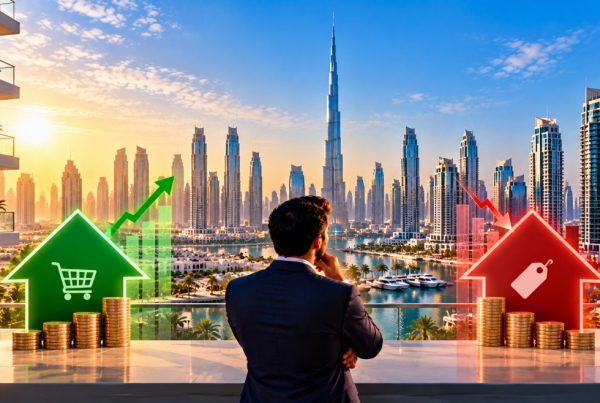
Naturally, this raises a question that many buyers, investors, and first-time homeowners are asking: Is Dubai heading towards a property oversupply?
It is an important question because future housing supply can influence property values, rental growth, financing decisions, and the timing of a purchase. Headlines often focus on large numbers of planned residential units, but understanding whether those units will actually create a market-wide oversupply requires a deeper look at Dubai property supply and demand dynamics.
The reality is more nuanced than a simple yes or no.
While Dubai has a substantial development pipeline, demand drivers remain strong. Population growth, business expansion, foreign investment, long-term residency initiatives, and ongoing infrastructure development continue to support housing demand. At the same time, some communities and property segments may face greater supply pressure than others.
In this guide, we’ll examine the latest Dubai property market trends, the current housing pipeline, the potential impact of oversupply on Dubai property prices, and whether buyers should purchase now or consider waiting.
Understanding Property Oversupply in Real Estate
Before examining Dubai specifically, it’s important to understand what oversupply actually means.
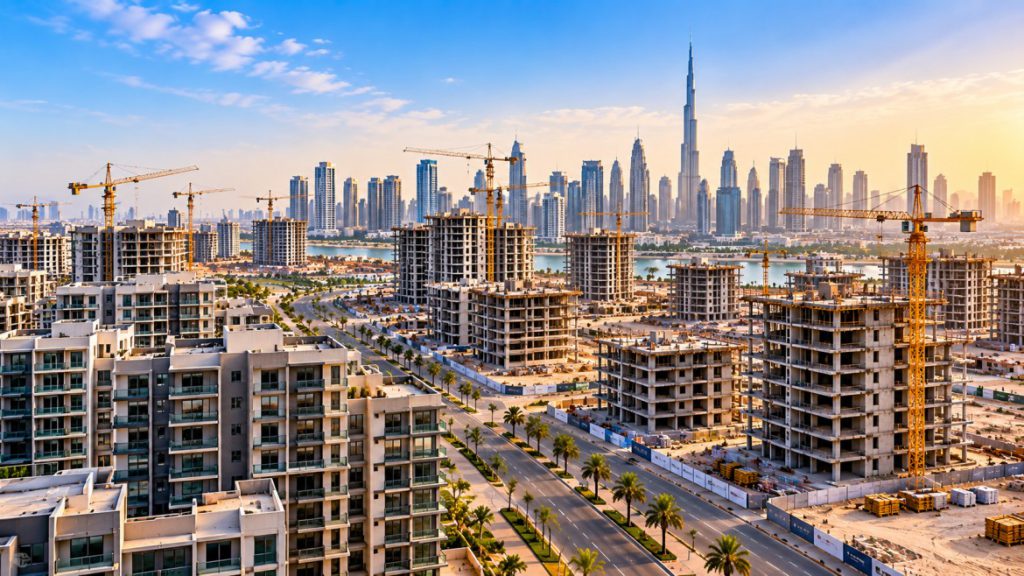
A property market becomes oversupplied when available housing significantly exceeds demand for an extended period. This can lead to:
- Slower price growth
- Falling property values
- Reduced rental rates
- Higher vacancy levels
- Increased competition among sellers and landlords
However, oversupply rarely affects an entire city equally.
In most real estate markets, supply pressure tends to be concentrated in particular:
- Communities
- Property types
- Price segments
- Unit sizes
For example, a city can simultaneously experience an oversupply of apartments while facing a shortage of family villas and townhouses.
This distinction is especially important when evaluating Dubai.
Why Oversupply Concerns Are Making Headlines
Oversupply concerns stem largely from the significant number of projects currently under construction across Dubai.
Industry research indicates that a substantial pipeline of apartments, villas, and townhouses is scheduled for delivery over the next several years. Various market reports suggest that 2026 and 2027 could be among the busiest residential handover years Dubai has seen in recent history.
At first glance, these figures may appear alarming.
However, buyers should remember an important fact:
Planned supply and completed supply are not the same thing.
Historically, many Dubai developments are completed later than initially projected due to construction schedules, phased project delivery, contractor capacity, financing considerations, and market conditions. Several market studies indicate that actual completions often fall significantly below announced pipeline figures.
This is one reason many analysts believe that raw pipeline numbers alone do not prove a future Dubai property oversupply scenario.
Dubai Property Supply and Demand: The Bigger Picture
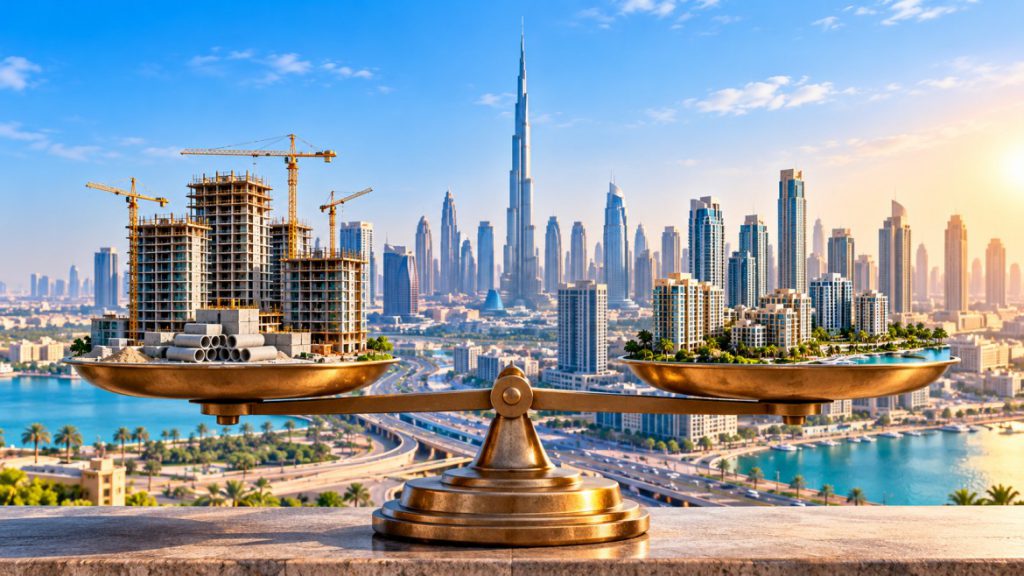
Supply Is Growing
There is little doubt that Dubai’s housing stock is expanding rapidly.
New residential projects continue to launch across communities such as:
- Dubai South
- Jumeirah Village Circle (JVC)
- Business Bay
- Arjan
- Dubai Hills Estate
- Dubai Creek Harbour
- Mohammed Bin Rashid City (MBR City)
Several market reports suggest particularly high future inventory concentrations in apartment-focused communities.
Demand Is Also Growing
Supply figures tell only half the story.
Demand continues to be supported by multiple structural drivers:
- Population growth
- Business expansion
- Relocation of professionals and entrepreneurs
- Golden Visa and long-term residency initiatives
- International wealth migration
- Strong tourism and hospitality sectors
- Infrastructure investment under long-term development plans
Market researchers consistently point to population growth as one of the most important factors supporting housing absorption in Dubai.
Unlike previous property cycles that were heavily influenced by speculation, the current market includes a larger proportion of end-users and long-term residents.
This changes how the market absorbs new housing supply.
Is Dubai Property Market Oversupplied Today?
Based on currently available evidence, it would be inaccurate to describe Dubai’s residential market as broadly oversupplied today.
Several indicators suggest otherwise:
- Strong transaction volumes
- Continued developer launches
- Sustained end-user demand
- Active mortgage market participation
- Ongoing population growth
- Continued rental demand
Market reports from leading researchers indicate that Dubai is transitioning toward a more balanced phase rather than experiencing a citywide oversupply crisis.
That said, buyers should not assume all communities will perform equally.
The more relevant question is:
Which locations may face higher supply risk?
Areas That May Experience Greater Supply Pressure
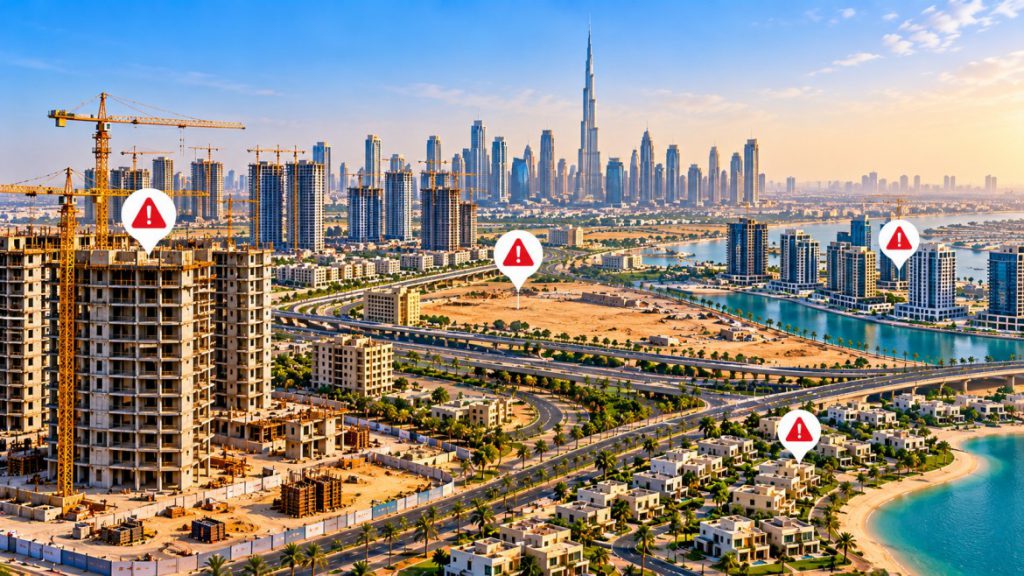
Not all new supply is distributed evenly.
Communities with large concentrations of upcoming apartments may experience more competition among sellers and landlords.
Several research reports identify areas with significant future residential pipelines, including:
| Community Type | Potential Impact |
| Apartment-heavy emerging communities | Higher competition and slower price growth |
| Large master-planned developments | Increased supply absorption requirements |
| Established prime districts | Typically lower relative supply risk |
| Mature waterfront communities | Often more resilient due to limited land availability |
Buyers considering investment purchases should carefully examine:
- Planned handovers
- Future project launches
- Vacancy trends
- Developer activity
- Population growth within the area
A community-specific analysis is often more useful than relying on citywide market averages.
Dubai Housing Supply Forecast: What Buyers Should Expect
Current forecasts generally point toward elevated housing deliveries over the next several years. Multiple industry reports anticipate a significant wave of new inventory entering the market through 2027 and beyond.
However, several factors could moderate the effects:
1. Construction Delays
Not every announced unit reaches completion on schedule.
Historically, actual handovers often fall below announced pipeline numbers.
2. Population Growth
Dubai continues attracting residents, professionals, entrepreneurs, and investors from around the world. Continued population growth helps absorb newly delivered housing.
3. Shift Toward Ownership
Many long-term residents are increasingly considering home ownership instead of renting, particularly when mortgage affordability becomes attractive compared with rental costs.
4. Developer Phasing Strategies
Large master developers often release inventory in stages rather than flooding the market simultaneously.
The Impact of Oversupply on Dubai Property Prices
Many buyers want to know:
Will more supply cause property prices to fall?
The answer depends on location, property type, and buyer segment.
Possible outcomes include:
More Moderate Price Growth
The most likely outcome in many communities is not necessarily price declines but slower appreciation.
Markets often move from rapid growth phases into more sustainable growth phases as supply increases.
Increased Buyer Choice
More listings create greater negotiating power for buyers.
This may result in:
- Better payment plans
- Developer incentives
- Reduced competition on some properties
- More inventory options
Apartment Market Pressure
Apartment-heavy communities with substantial incoming supply may experience slower price growth than villa communities with more limited inventory. Several market reports suggest future apartment supply significantly exceeds villa supply.
Premium Communities May Remain Resilient
Communities with:
- Strong location advantages
- Waterfront access
- Limited future land availability
- High-end amenities
often respond differently to broader market supply cycles.
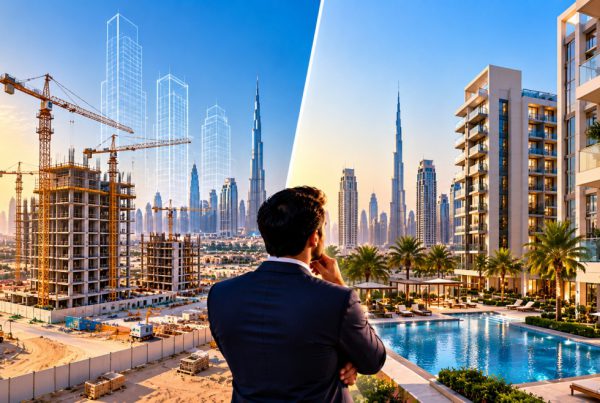
Ready Property vs Off-Plan Property During a High-Supply Cycle
One of the biggest decisions buyers face is choosing between ready and off-plan property.
| Factor | Ready Property | Off-Plan Property |
| Move-in timeline | Immediate | Future handover |
| Rental income | Immediate potential | Delayed |
| Market certainty | Higher | Lower |
| Payment flexibility | Typically less flexible | Often more flexible |
| Exposure to future market conditions | Lower | Higher |
| Construction risk | Minimal | Present |
When Ready Property May Be Better
Consider ready property if:
- You plan to move in soon
- You want immediate rental income
- You prefer completed infrastructure
- You are concerned about future supply competition
When Off-Plan Property May Be Better
Consider off-plan if:
- You have a longer investment horizon
- You want staged payment plans
- You are buying from a reputable developer
- You have carefully assessed future supply in the community
How Dubai’s Regulatory Framework Protects Buyers
When assessing oversupply risk, buyers should also understand market regulation.
Dubai’s off-plan sector operates under a structured regulatory framework overseen by the Dubai Land Department (DLD) and RERA.
Under Dubai’s escrow account regulations, developers selling off-plan units must place buyer funds into project-specific escrow accounts designed to protect purchasers and support project completion.
Key protections include:
- Project registration requirements
- Escrow account controls
- Construction-linked fund release mechanisms
- Developer oversight
- Interim property registration processes
These safeguards have significantly strengthened investor confidence compared with earlier property cycles.
Should Buyers Purchase Now or Wait?
There is no universal answer.
The right timing depends on your goals.
Buy Now If
- You found a property that suits your long-term needs.
- You plan to live in the property.
- Financing is affordable.
- The location has strong demand fundamentals.
- The property comes from a reputable developer.
Consider Waiting If
- You are uncertain about community-level supply.
- You are focused solely on short-term capital appreciation.
- You have not completed due diligence.
- You expect larger future inventory options in your target area.
Trying to perfectly time the market is extremely difficult.
For end-users purchasing a primary residence, property suitability and affordability often matter far more than short-term price fluctuations.
Common Mistakes Buyers Make When Assessing Oversupply Risk
Assuming All Dubai Communities Behave the Same
Each area has unique supply and demand characteristics.
Focusing Only on Launch Numbers
Look at actual completion data, not just announcements.
Ignoring Infrastructure Growth
Road networks, schools, hospitals, transport links, and business districts significantly influence housing demand.
Looking Only at Sale Prices
Evaluate:
- Service charges
- Property management costs
- Mortgage expenses
- Rental demand
- Future competing supply
Choosing Developers Solely Based on Launch Discounts
Always evaluate:
- Track record
- Delivery history
- Construction progress
- Financial stability
Buyer Due Diligence Checklist
Before purchasing property in Dubai:
Property Checks
- Verify title status
- Review floor plans
- Understand service charges
- Assess community infrastructure
Developer Checks
- Review delivery history
- Verify project approvals
- Confirm escrow account compliance for off-plan projects
Financial Checks
- Obtain mortgage pre-approval if applicable
- Budget for registration and transfer costs
- Include maintenance expenses
Market Checks
- Review future supply pipeline
- Compare comparable properties
- Assess rental demand
How Properties.market Can Help Buyers Evaluate Market Risks
When comparing ready and off-plan opportunities, access to reliable property information becomes increasingly important.
Properties.market enables buyers to explore a wide range of properties across Dubai, compare communities, evaluate options across different budgets, and research emerging locations before making a purchase decision. Rather than relying solely on market headlines, buyers should assess specific properties, developers, and communities individually.
The evidence suggests that Dubai is entering a period of significant new housing delivery, but that does not automatically mean a citywide property oversupply crisis.
Upcoming inventory will likely create more choices for buyers and may moderate price growth in certain apartment-heavy communities. However, strong population growth, continued international demand, long-term residency initiatives, and Dubai’s global attractiveness continue to support housing absorption
For most buyers, the better question is not whether Dubai as a whole is oversupplied, but whether a specific community, property type, or project faces elevated supply risk.
The smartest approach is to evaluate each purchase based on location fundamentals, developer quality, financing affordability, future supply pipelines, and long-term objectives rather than making decisions based solely on oversupply headlines.
Disclaimer: This article is for general informational purposes only and does not constitute legal, financial, investment, or mortgage advice. Property values, supply forecasts, market conditions, and regulations may change. Buyers should conduct independent due diligence and consult qualified professionals before making property investment decisions.
Frequently Asked Questions
1. Is Dubai property market oversupplied in 2026?
Current evidence does not suggest a citywide oversupply. However, some apartment-focused communities with large future delivery pipelines may experience greater supply pressure than others.
2. Will increased housing supply reduce Dubai property prices?
Not necessarily. Increased supply may slow price growth in certain locations, but outcomes depend on demand, population growth, property type, and community-specific factors.
3. Are apartments more vulnerable to oversupply than villas?
Many market reports indicate significantly larger apartment pipelines compared with villa supply, meaning some apartment segments could face more competition.
4. Should I buy off-plan property if more supply is coming?
Off-plan purchases can still be attractive if the project is in a strong location, offered by a reputable developer, and aligns with your long-term goals. Careful due diligence is essential.
5. How can I check whether an off-plan project is properly regulated?
Buyers should verify project registration through the Dubai Land Department and confirm compliance with RERA and escrow account requirements.
6. What is an escrow account in Dubai real estate?
An escrow account is a project-specific account where buyer payments for off-plan units are held and released according to construction progress under Dubai’s regulatory framework.
7. Is now a good time to buy property in Dubai?
The answer depends on your objectives, finances, and target location. End-users focused on long-term ownership may find suitable opportunities regardless of short-term market cycles.
8. Which communities should buyers evaluate carefully for future supply?
Buyers should examine planned handovers, developer activity, and competing inventory in any chosen area before purchasing rather than relying on citywide averages.