Buying a property is a major financial decision, and understanding the common mistakes buyers should avoid can help you make a safer and smarter investment.
The UAE has established itself as one of the world’s leading destinations for off-plan real estate investment. Attractive payment plans, modern master-planned communities, and the potential for long-term capital appreciation continue to draw both local and international buyers. From luxury waterfront developments in Dubai to growing residential communities in Abu Dhabi and Ras Al Khaimah, off-plan properties offer opportunities across different budgets and investment goals.
However, purchasing an off-plan property is different from buying a ready home. Since construction may still be underway, buyers are investing in a vision rather than a completed property. This makes the developer one of the most important factors in the decision-making process.
A reputable developer is more likely to deliver projects on time, maintain high construction standards, comply with regulatory requirements, and provide better after-sales support. Conversely, choosing a developer without proper research can lead to delays, quality concerns, or financial uncertainty.
This guide explains how to evaluate a developer before booking an off-plan property, highlights the latest UAE market trends, and provides practical tips to help you make a well-informed investment.
Latest UAE Off-Plan Property Market Updates
The latest UAE off-plan property market updates show that this segment continues to be one of the strongest in the real estate sector. New project launches by leading developers, strong population growth, infrastructure expansion, and sustained international demand have contributed to increased off-plan transactions across Dubai and other emirates.
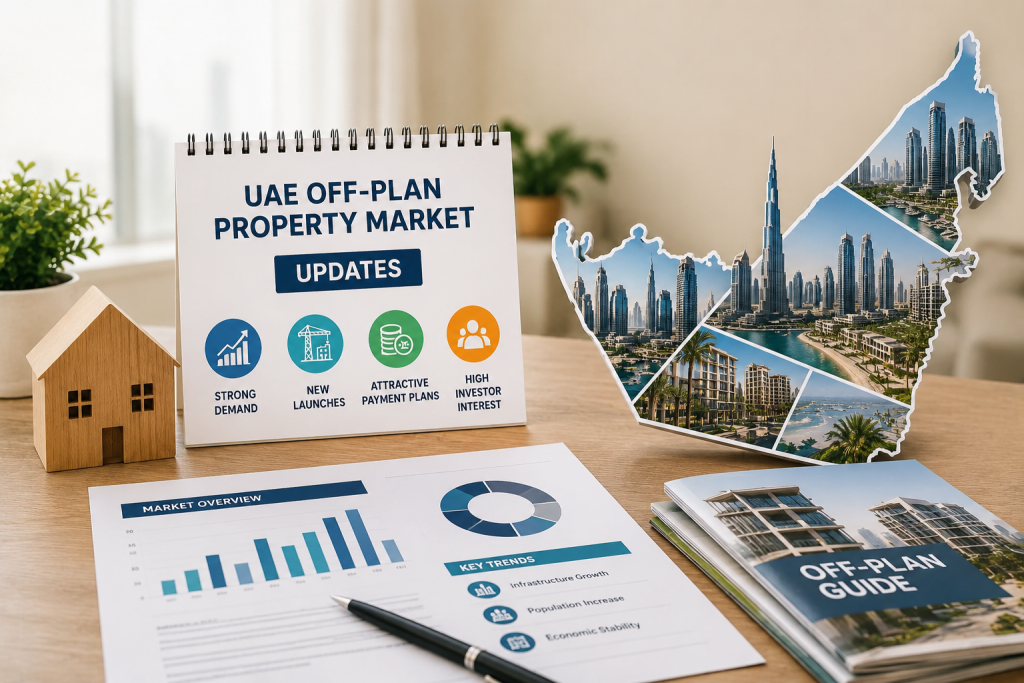
Recent market trends include:
- Continued growth in off-plan sales across major UAE cities.
- Strong demand from overseas investors seeking flexible payment plans.
- Increased development of integrated communities with schools, retail, healthcare, and leisure facilities.
- Greater adoption of sustainable construction and smart home technologies.
- Buyers placing more emphasis on developer credibility, delivery history, and project quality.
- Enhanced transparency through escrow account regulations and regulatory oversight.
As competition among developers increases, buyers are conducting more thorough research before committing to an off-plan investment.
Why Choosing the Right Developer Matters
Location and pricing are important, but the developer ultimately determines whether a project is delivered as promised.
A reliable developer typically offers:
- Proven delivery history
- Strong financial stability
- High construction standards
- Transparent communication
- Reliable customer support
- Well-maintained communities
- Better long-term property value
Taking time to evaluate the developer helps reduce investment risks and supports better long-term returns.
1. Research the Developer’s Track Record
One of the first steps is reviewing the developer’s experience within the UAE property market.
Ask questions such as:
- How many projects have they completed?
- Were previous developments delivered on schedule?
- Are completed communities well maintained?
- Do buyers report positive experiences?
- Have they successfully completed projects during different market conditions?
A long history of successful project delivery generally indicates greater reliability.
Whenever possible, visit completed communities to assess the overall quality of construction, landscaping, amenities, and maintenance.
If you’re new to the UAE property market, our guide on Thinking of Buying Property in Dubai? Here’s What Every Indian Investor Should Know explains the buying process and important considerations before investing.
2. Verify Government Approvals
Before paying a booking amount, confirm that the project has received the necessary regulatory approvals.
Check for:
- Project registration
- Development approvals
- Escrow account registration
- Sales approvals
- Land ownership documentation
Projects that comply with UAE regulations provide greater transparency and protection for buyers.
3. Review Previously Completed Projects
Completed developments provide valuable insight into what you can realistically expect.
Evaluate:
- Construction quality
- Exterior finishes
- Building maintenance
- Community facilities
- Landscaping
- Parking areas
- Resident satisfaction
If possible, speak with existing residents to learn about their ownership experience.
4. Assess Construction Quality
Construction quality affects long-term maintenance costs, rental demand, and resale value.
Pay attention to:
- Building materials
- Interior finishes
- Common areas
- Elevators
- Ventilation
- Energy efficiency
- Smart home integration
- Parking design
Developers who consistently maintain high construction standards often deliver stronger long-term value.
5. Evaluate Financial Strength
Financial stability is one of the most overlooked aspects when evaluating a developer.
Developers with strong financial resources are generally better positioned to:
- Continue construction during market fluctuations
- Complete projects on schedule
- Maintain quality standards
- Deliver community amenities as promised
Review the developer’s history, completed portfolio, and overall market presence before making a commitment.
6. Understand the Payment Plan
One of the biggest advantages of off-plan properties is flexible payment plans.
However, buyers should evaluate:
- Booking amount
- Construction-linked instalments
- Post-handover payment options
- Completion timeline
- Final payment obligations
Avoid choosing a project solely because of attractive payment terms. The overall quality of the development and the developer’s reputation are equally important.
Before evaluating payment plans, learn how to identify strong investment opportunities in our guide on How to Identify Profitable Real Estate Deals in UAE.
7. Read Customer Reviews and Buyer Feedback
One of the best ways to evaluate a developer is by learning from people who have already purchased their properties. While marketing brochures showcase the developer’s vision, existing homeowners can provide valuable insights into the actual buying and living experience.
Look for feedback on:
- Construction quality
- Project delivery timelines
- Customer service
- Maintenance standards
- Community management
- After-sales support
- Overall satisfaction
Keep in mind that individual reviews may vary, so it’s best to look for consistent patterns rather than relying on a single opinion.
8. Evaluate After-Sales Service
Your relationship with the developer doesn’t end when you receive the keys. A reliable developer should continue to provide support after handover.
Consider whether the developer offers:
- Dedicated customer support
- Warranty assistance
- Maintenance coordination
- Defect rectification process
- Community management
- Transparent communication
Strong after-sales service can significantly improve the ownership experience and help resolve issues more efficiently.
9. Review the Sales and Purchase Agreement (SPA)
Before paying the booking amount, carefully review the Sales and Purchase Agreement (SPA). This legal document outlines the rights and responsibilities of both the buyer and the developer.
Pay close attention to:
- Payment schedule
- Project completion timeline
- Handover conditions
- Cancellation terms
- Delay clauses
- Refund policy
- Warranty provisions
If any clause is unclear, seek professional legal advice before signing.
10. Assess the Location and Master Plan
Even the best developer cannot compensate for a poorly planned location.
When evaluating an off-plan project, consider:
- Road connectivity
- Public transport access
- Schools and universities
- Hospitals
- Shopping centers
- Business districts
- Parks and recreational facilities
- Future infrastructure developments
Projects located within well-planned master communities often enjoy stronger demand and better long-term appreciation.
11. Check Community Amenities
Today’s buyers expect more than just a residential building. Modern developments are designed to offer a complete lifestyle experience.
Look for amenities such as:
- Swimming pools
- Fitness centers
- Children’s play areas
- Landscaped gardens
- Walking and cycling tracks
- Community retail outlets
- Co-working spaces
- EV charging stations
- Smart security systems
Communities with thoughtfully planned amenities are generally more attractive to both homeowners and tenants.
12. Understand the Handover Timeline
Construction schedules can vary depending on project size and market conditions.
Before booking, ask the developer about:
- Expected completion date
- Current construction progress
- Key construction milestones
- Handover procedures
- Inspection process
Developers who provide regular construction updates demonstrate greater transparency and professionalism.
13. Compare Multiple Developers
Avoid booking the first project you visit. Comparing several developers helps you make a more informed decision.
Evaluate each developer based on:
- Reputation
- Completed projects
- Construction quality
- Payment plans
- Community facilities
- Customer reviews
- After-sales support
- Overall value for money
A detailed comparison often reveals significant differences that may not be immediately apparent during sales presentations.
Red Flags to Watch Before Booking
While many UAE developers maintain high standards, buyers should remain cautious if they notice any warning signs.
Potential red flags include:
- Limited information about previous projects
- Unclear project approvals
- Unrealistic completion timelines
- Poor communication from the sales team
- Lack of transparency regarding fees
- Incomplete legal documentation
- Consistently negative customer feedback
Taking the time to investigate these issues before booking can help reduce investment risk.
Don’t Choose Based Only on Price
Lower launch prices and attractive payment plans can be appealing, but they shouldn’t be the only deciding factors.
Instead, evaluate the overall investment by considering:
- Developer reputation
- Construction quality
- Project location
- Community infrastructure
- Long-term appreciation potential
- Rental demand
- Maintenance standards
A slightly higher investment in a trusted developer may deliver stronger value over the long term than choosing a lower-priced project with greater uncertainty.
Choosing the right project is just one part of a successful investment. Our guide on How to Identify Profitable Real Estate Deals in UAE explains how to assess opportunities based on location, demand, and long-term growth potential.
Developer Evaluation Checklist Before Booking
Before paying the booking amount for an off-plan property, use the following checklist to make a well-informed decision.
✔ Verify the developer’s track record.
✔ Review completed projects and visit them if possible.
✔ Confirm project registration and regulatory approvals.
✔ Ensure the project has an escrow account.
✔ Read the Sales and Purchase Agreement (SPA) carefully.
✔ Compare payment plans and handover schedules.
✔ Check customer reviews and after-sales service.
✔ Evaluate construction quality and community amenities.
✔ Assess the location’s future growth potential.
✔ Understand all associated costs before booking.
Following this checklist can help reduce risks and improve your confidence when investing in an off-plan property.
Common Mistakes Buyers Should Avoid
Even experienced investors can make mistakes when purchasing an off-plan property. Being aware of these common pitfalls can help you make a smarter investment.
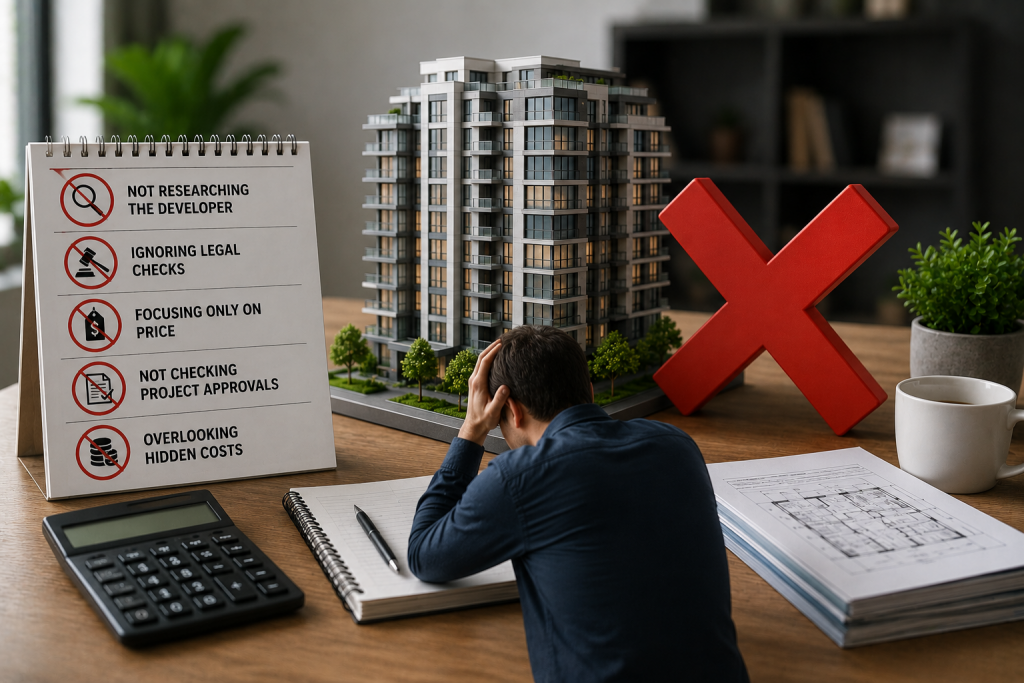
Choosing Based Only on Price
A lower launch price may seem attractive, but it should never be the only deciding factor. Evaluate the developer’s reputation, construction quality, and long-term investment potential before making a decision.
Ignoring the Developer’s History
Some buyers focus entirely on brochures and promotional offers without researching the developer’s previous projects. Always review completed developments and delivery history before booking.
Not Reading the Sales Agreement
The Sales and Purchase Agreement (SPA) outlines payment schedules, handover timelines, cancellation clauses, and buyer obligations. Failing to review this document carefully can lead to misunderstandings later.
Overlooking Future Community Development
A project’s value depends not only on the building itself but also on the surrounding community. Check for planned schools, healthcare facilities, retail centers, public transport, and road connectivity that can enhance long-term demand.
Ignoring Additional Costs
Beyond the booking amount, buyers should budget for:
- Dubai Land Department (DLD) fees
- Registration charges
- Service charges
- Maintenance expenses
- Utility connections
- Home insurance
Understanding the total cost of ownership helps avoid unexpected financial commitments after purchase.
Why Developer Reputation Influences Long-Term Investment
A trusted developer contributes more than just a completed building. Their reputation often influences:
- Property quality
- Timely project delivery
- Rental demand
- Community maintenance
- Resale value
- Buyer confidence
- Long-term investment performance
Projects delivered by well-established developers often attract stronger interest from both end-users and investors, helping support demand over time.
Frequently Asked Questions (FAQ)
1. Why is it important to evaluate a developer before booking an off-plan property?
A developer’s experience, financial stability, and delivery history can influence construction quality, project completion, and the overall ownership experience.
2. How can I check a developer’s reputation?
Research completed projects, visit existing communities, read buyer reviews, and review the developer’s track record of delivering projects on time.
3. What is an escrow account in UAE real estate?
An escrow account is a regulated account where buyer funds are held and released according to construction progress, providing additional protection for purchasers.
4. Should I visit the developer’s completed projects?
Yes. Visiting completed developments allows you to assess construction quality, maintenance standards, and the overall living environment before investing.
5. Is the lowest-priced off-plan project always the best investment?
Not necessarily. Buyers should evaluate location, developer reputation, project quality, payment plans, and long-term appreciation potential rather than focusing only on price.
6. What documents should I review before booking?
Review the Sales and Purchase Agreement (SPA), payment schedule, project approvals, booking form, and any other documents provided by the developer.
7. How important is after-sales service?
After-sales support is important because it helps buyers resolve maintenance issues, warranty claims, and other concerns after the property is handed over.
8. Can overseas investors buy off-plan property in the UAE?
Yes. Eligible buyers from many countries can purchase off-plan properties in designated freehold areas, subject to applicable regulations.
9. What should I compare when evaluating multiple developers?
Compare their delivery record, construction quality, completed projects, customer reviews, financial stability, payment plans, and community amenities.
10. Is investing in an off-plan property a good long-term strategy?
For many buyers, off-plan properties can offer attractive payment plans and long-term appreciation potential. However, success depends on choosing the right location, project, and developer.
Choosing the right developer is one of the most important decisions when investing in an off-plan property. While attractive prices and flexible payment plans often draw buyers to new developments, the developer’s reputation, financial strength, construction quality, and commitment to delivering projects on time ultimately determine the success of your investment.
Take the time to research completed projects, verify approvals, understand the Sales and Purchase Agreement (SPA), and compare multiple developers before making a booking decision. A careful evaluation today can help reduce risks and provide greater confidence in your property purchase.
Whether you’re buying your first home or expanding your investment portfolio, partnering with a trusted developer is the foundation of a successful off-plan investment in the UAE.