The best emerging areas in Dubai to invest in 2026 are not the ones everyone is already talking about. By the time a community becomes a headline, the early-stage pricing is gone. The real opportunity sits in the zones that have the infrastructure signals, the population growth, and the development pipeline, but have not yet attracted the full weight of buyer attention. This guide identifies exactly those communities and explains what makes each one worth serious consideration right now.
What Makes a Dubai Area “Emerging” Worth Investing In
Not every up-and-coming neighbourhood is worth your capital. Emerging areas that produce genuine returns share a specific set of characteristics that separate real opportunity from wishful thinking.
Infrastructure investment that is announced but not yet complete. The most reliable price catalyst in any market is new infrastructure. Roads, metro lines, schools, hospitals, and retail destinations all drive demand before they open. Investors who buy in areas where these are under construction rather than fully delivered capture the appreciation rather than paying for it.
Population spillover from established premium communities. When a community like Downtown Dubai or Dubai Marina becomes fully priced, buyers and renters look adjacent. Emerging areas that sit within reasonable proximity to established hotspots benefit from this overflow.
Developer entry into previously quiet zones. When credible developers acquire land and launch projects in areas that previously had limited activity, it signals that internal feasibility analysis has identified value. Developer conviction is one of the most reliable early indicators of market movement.
Rising transaction volumes without equivalent price rises. This gap between activity and price is where undervaluation lives and where the best emerging area investments are found.
For investors who want a systematic framework for evaluating any Dubai community against these criteria, the guide on how to identify profitable real estate deals in the UAE provides the full analytical approach before any capital is committed.
Top Emerging Areas in Dubai to Invest in 2026
Dubai South: The Airport City Still Gaining Momentum
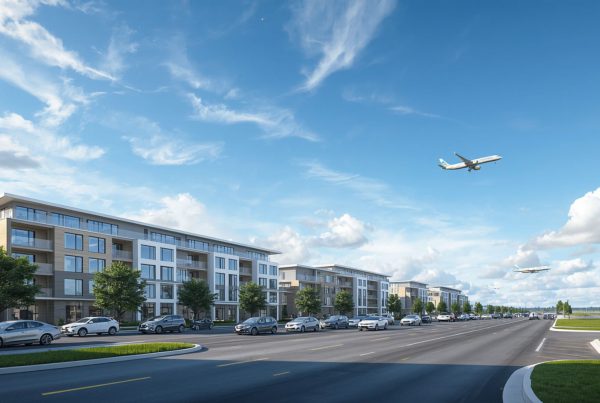
Dubai South is one of the most strategically positioned yet persistently underpriced large-scale developments in the UAE. Built around Al Maktoum International Airport and the Expo 2020 site, the area has been developing steadily for years and is now approaching a critical mass of residential, commercial, and logistics infrastructure.
The planned expansion of Al Maktoum International Airport into one of the world’s largest aviation hubs is the single most significant long-term demand driver in this zone. When an airport that size becomes fully operational, it creates sustained employment, tourism, and residential demand across the surrounding corridor for decades.
Current property prices in Dubai South remain accessible by Dubai standards, with apartments available at price points that make the entry compelling for investors taking a three to five year view. The combination of near-term yield from the existing residential population and medium-term appreciation as airport expansion progresses makes this one of the most credible emerging investment cases in Dubai right now.
Explore current properties for sale in Dubai to compare Dubai South pricing against established communities and see how the gap is currently positioned.
Jumeirah Village Circle: Still Producing Returns at Mid-Market Entry
Jumeirah Village Circle is not a new name, but it continues to be one of the most consistent yield-producing communities in Dubai and has not yet completed its appreciation cycle.
The community has seen significant new supply over the past three years, but absorption has kept pace with delivery. Tenant demand remains strong, driven by the large working professional population that prefers JVC’s central location and accessible rents over more expensive alternatives.
Studios and one-bedroom apartments in JVC can still be acquired at price points that deliver net yields of 6 to 7 percent, which is above average for Dubai. The community’s ongoing infrastructure improvements, new retail openings, and continued population growth support a positive medium-term price trajectory.
For investors who have not yet entered JVC, 2026 represents a window that closes as each year of completed infrastructure reduces the remaining upside. Studios from AED 380,000 and one-bedroom apartments from AED 550,000 remain entry-level opportunities with proven tenant demand behind them.
Al Furjan: Metro Connectivity Driving a New Phase of Growth
Al Furjan sits between Sheikh Zayed Road and Mohammed Bin Zayed Road with its own dedicated metro station on the Route 2020 extension. Metro access is one of the most consistently reliable drivers of residential property demand in Dubai, and Al Furjan’s station has been active long enough to be reflected in tenant preference but has not yet fully repriced into purchase values.
The community offers a mix of apartments, townhouses, and villas in a family-oriented setting with growing retail infrastructure. Villa rents in Al Furjan have been rising as spillover demand from Arabian Ranches and Dubai Hills Estate pushes renters toward more accessible alternatives.
For investors who want villa exposure without villa pricing in the premium communities, Al Furjan townhouses in the AED 1,200,000 to AED 1,800,000 range represent a credible entry point with tenant demand from families who cannot afford the communities adjacent to it.
Meydan and Mohammed Bin Rashid City: Luxury at a Relative Discount
Mohammed Bin Rashid City and the wider Meydan corridor represent one of the most interesting emerging investment cases in Dubai for investors who can operate above the AED 1,000,000 budget threshold.
The area is positioned between Downtown Dubai and Dubai Hills Estate, giving it proximity to two of the city’s most established premium zones. Development density is still building, which means current pricing has not yet caught up to the location’s ultimate premium potential.
Villas and apartments in this corridor are attracting increasing attention from both end-users who want the address and investors who recognise the infrastructure gap between current pricing and future delivered value. The Meydan racecourse, the developing business district, and the new school and retail openings in the area are all feeding into a demand picture that supports medium-term price growth.
Business Bay Periphery: Yield From Overflow Demand
Business Bay itself is an established market. But the areas immediately surrounding it, including parts of the Dubai Canal waterfront and the transitional zones between Business Bay and Jumeirah, are still capturing overflow tenant demand at purchase prices that do not fully reflect their proximity to one of Dubai’s most active commercial and residential hubs.
Compact apartments in buildings along the canal that are priced at a discount to the core Business Bay market can deliver yields of 6 to 8 percent while sitting within walking distance of metro access and a developed retail and dining infrastructure.
For investors looking for Dubai yield at a price point below the Business Bay headline figures, these peripheral positions offer a more compelling entry than the established core.
Emerging Area Investment Comparison Table
| Area | Entry Price Range | Est. Net Yield | Primary Driver | Time Horizon |
|---|---|---|---|---|
| Dubai South | AED 450,000 to AED 900,000 | 6 to 8% | Airport expansion | 3 to 7 years |
| Jumeirah Village Circle | AED 380,000 to AED 900,000 | 6 to 7% | Sustained tenant demand | 2 to 4 years |
| Al Furjan | AED 600,000 to AED 1,800,000 | 5 to 7% | Metro access, family demand | 3 to 5 years |
| MBR City / Meydan | AED 1,000,000 to AED 4,000,000+ | 5 to 7% | Location between two premiums | 4 to 7 years |
| Business Bay Periphery | AED 650,000 to AED 1,200,000 | 6 to 8% | Overflow from established hub | 2 to 4 years |
How to Verify an Emerging Area Before You Invest
Identifying the right emerging area is only half the process. Verifying the deal within that area requires the same due diligence that applies to any UAE property purchase.
Confirm clean title deed ownership through the Dubai Land Department before making any offer. Check that no mortgage or legal restriction is attached to the property. Verify the seller’s identity matches the registered title. These steps are covered in detail in the guide on how to check property ownership history in Dubai.
For off-plan opportunities in emerging areas, confirm the developer’s RERA registration, verify the escrow account protection for your payments, and understand the payment plan structure before committing capital. The full off-plan purchase process and what the SPA should contain is explained in the guide on what is a Sales and Purchase Agreement in Dubai real estate.
For investors who want to understand how to scale from a single Dubai emerging area investment into a full multi-emirate portfolio, the guide on how to build a property portfolio in UAE from scratch covers the systematic approach that turns individual deals into a coordinated wealth-building strategy.
Frequently Asked Questions (FAQ)
What are the best emerging areas to invest in Dubai in 2026?
Dubai South, Jumeirah Village Circle, Al Furjan, Mohammed Bin Rashid City, and the Business Bay peripheral zone are the strongest emerging investment areas in Dubai for 2026. Each offers a different combination of yield, appreciation potential, and entry price point. Dubai South stands out for long-term airport-driven growth. JVC delivers the strongest current yield at accessible price points. MBR City offers premium positioning at a relative discount to its neighbouring established communities.
Which Dubai area will grow the most in the next 5 years?
Dubai South has the strongest long-term structural demand driver through the planned expansion of Al Maktoum International Airport into one of the world’s largest aviation hubs. The employment, tourism, and population growth that a mega-airport of that scale generates creates multi-decade demand for surrounding residential property. Mohammed Bin Rashid City is also positioned for meaningful appreciation as it fills in the gap between Downtown Dubai and Dubai Hills Estate.
Is it too late to invest in Jumeirah Village Circle in 2026?
No. While JVC has been an established rental market for several years, it has not completed its appreciation cycle. New retail, improved road connectivity, and continued population growth from Dubai’s expanding professional workforce continue to support demand. Studios and one-bedroom apartments at current prices still deliver net yields above the Dubai average, making entry in 2026 financially sound for both yield-focused and balanced return investors.
How do I know if an emerging Dubai area is genuinely undervalued?
Look for a price per square foot gap of 20 percent or more relative to comparable established communities nearby, rising transaction volumes without equivalent price rises, new infrastructure announced but not yet delivered in or around the area, and developer entry through new project launches. These signals together indicate a market where buyer awareness has not yet caught up with the fundamental quality or location advantage of the area.
What is the minimum investment to buy in a Dubai emerging area?
Entry points vary by community. Dubai South and JVC offer studios from AED 380,000 to AED 500,000. Al Furjan apartments start from around AED 600,000. MBR City and the Meydan corridor typically start from AED 1,000,000 for apartments. Business Bay peripheral apartments are accessible from around AED 650,000. Total transaction costs of 4 to 6 percent above the purchase price should be budgeted in addition to the headline figure.
Emerging areas in Dubai reward investors who act on research before the market catches up. The communities covered in this guide all share the same fundamental characteristic: the infrastructure and demand signals that precede repricing are visible now, but the price has not yet moved to fully reflect them.
To continue building your Dubai investment knowledge, browse the full range of properties for sale in Dubai across all communities, and review the UAE rental yield guide for 2026 to see how Dubai’s emerging areas compare against other UAE emirates on current return metrics.