Buying or renting a ready-to-move property in Dubai is an exciting milestone. Whether you are purchasing your first apartment, investing in a residential property, or moving your family into a new villa, receiving the keys to your property is an important step. However, before celebrating your new beginning, there is one essential responsibility you should never overlook: conducting a thorough property inspection.
Dubai’s real estate market offers a wide selection of ready-to-move apartments, villas, and townhouses across established and emerging communities. From luxury waterfront residences to affordable family apartments, buyers and tenants have plenty of options. However, a property’s attractive appearance, premium interiors, and modern facilities do not necessarily guarantee that everything is functioning properly.
Imagine moving into your new apartment only to discover leaking bathroom pipes, malfunctioning air conditioning, damaged kitchen cabinets, or electrical issues. These problems can lead to unexpected expenses, inconvenience, and disagreements with the developer, landlord, or property management company.
This is why a professional ready-to-move property inspection in Dubai is essential before accepting possession.
A proper inspection helps identify visible defects, assess the property’s condition, verify essential facilities, and ensure that the property generally matches the agreed specifications. It also gives buyers and tenants an opportunity to document outstanding issues and request necessary corrections before completing the handover process.
Dubai has established regulatory and administrative systems through authorities such as the Dubai Land Department (DLD), Real Estate Regulatory Agency (RERA), Dubai Municipality, and Dubai Electricity and Water Authority (DEWA). Understanding the role of these authorities can help property buyers and tenants make more informed decisions.
In this comprehensive guide, Properties Market explains how to inspect a ready-to-move property in Dubai, what to check before accepting the keys, which documents to verify, and how to avoid common property handover mistakes.
Whether you are a first-time buyer, an experienced investor, or a tenant, this step-by-step guide will help you approach your property inspection with greater confidence.
Step-by-Step Guide to Ready-to-Move Property Inspection in Dubai
A property inspection should never be limited to checking whether the walls look attractive or the rooms are clean. It should cover the property’s physical condition, electrical and plumbing systems, air conditioning, documentation, and shared facilities.
Here is a practical inspection process to follow before accepting your new property.
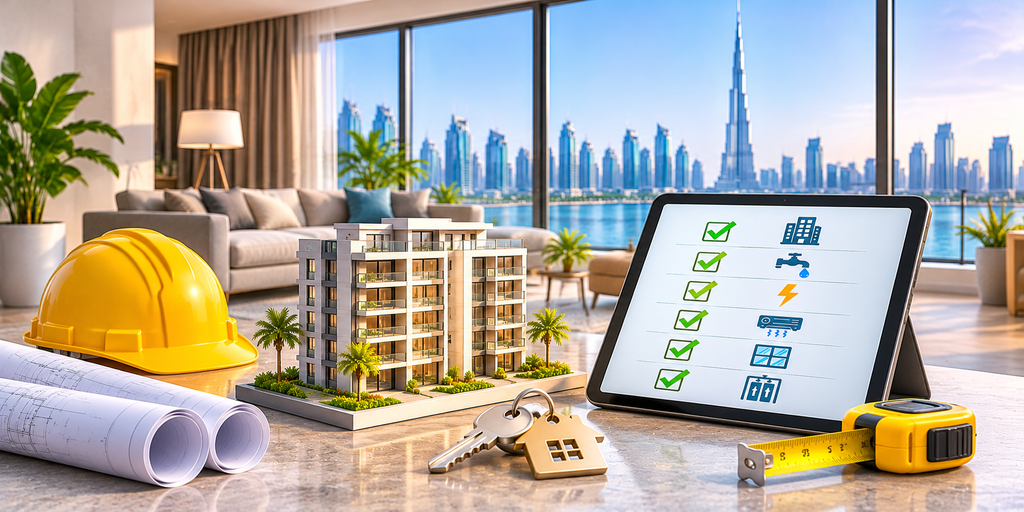
Step 1: Verify Property Documents and Legal Information
Before examining the physical condition of the property, start by checking its legal documentation.
Documentation verification is particularly important when purchasing a ready-to-move property. Even if the property appears complete, buyers should confirm that the ownership and transaction details are properly documented.
Important documents to review include:
- Title Deed: Buyers should verify the property’s ownership documentation through the Dubai Land Department.
- Sale and Purchase Agreement (SPA): Check whether the property details, purchase price, payment conditions, and agreed specifications match the transaction.
- Building Completion Certificate: Where applicable, confirm that the relevant authority has issued the project’s completion certificate.
- Service Charge Information: Review applicable annual service charges and outstanding amounts.
- Property Identification: Verify the building name, unit number, floor, parking allocation, and property details.
The Dubai Land Department provides an official Title Deed Verification service through its website and Dubai REST application. Buyers can use this service to check the validity of a title deed.
Step 2: Inspect Walls, Ceilings, Floors, and Paintwork
The next step is to examine the property’s overall structural appearance and interior finishing.
Walls, ceilings, and floors can reveal signs of poor workmanship, water damage, or inadequate maintenance. Although minor cosmetic imperfections may not affect the property’s usability, significant defects should be documented before handover.
Check the following:
Walls and Paintwork
- Look for cracks, peeling paint, and uneven finishing.
- Check for damp patches or water stains.
- Inspect corners and areas behind doors for damage.
- Look for signs of mould or unusual discoloration.
Ceilings
- Check for visible cracks and water leakage marks.
- Inspect areas around air-conditioning vents.
- Look for uneven surfaces or damaged plaster.
- Check ceiling corners for signs of moisture.
Flooring
- Inspect tiles, wooden flooring, or marble for cracks.
- Check for uneven surfaces and loose tiles.
- Look for scratches, stains, and damaged edges.
- Ensure floor finishes are consistent with the agreed specifications.
Step 3: Check Electrical Systems and Lighting
Electrical safety and functionality are among the most important parts of a property inspection.
A property may have beautifully designed interiors, but faulty electrical installations can create inconvenience and potential safety risks.
During the inspection, check:
- Whether all switches operate correctly.
- Whether lights turn on without flickering.
- Whether electrical sockets are properly fitted.
- Whether the main distribution board is labelled.
- Whether visible electrical fittings show signs of damage.
- Whether installed appliances receive power correctly.
Test commonly used electrical points, including those in bedrooms, kitchens, bathrooms, and living areas.
Also, inspect the doorbell, intercom, and any installed smart-home systems.
Avoid opening electrical panels or attempting repairs yourself. If you notice exposed wiring, burning smells, unusual heat, or repeated electrical tripping, arrange an assessment by a qualified electrician.
Why does this matter?
Electrical defects can become expensive to repair after occupancy, especially when they involve concealed wiring or incorrectly installed fittings.
Step 4: Inspect Plumbing, Bathrooms, and Water Supply
Plumbing problems are among the most common issues that property owners and tenants may discover after moving in.
A detailed inspection should cover all water outlets, drainage points, bathroom fixtures, and kitchen plumbing.
Check the following areas:
- Turn on bathroom and kitchen taps.
- Check whether hot and cold water systems operate correctly.
- Inspect sinks and washbasins for leakage.
- Check showerheads and water pressure.
- Flush toilets and observe whether they drain properly.
- Inspect visible pipes and connections.
- Check bathroom floors for water accumulation.
- Examine the condition of shower screens and silicone sealing.
Pay particular attention to the areas underneath kitchen sinks and bathroom cabinets, as small leaks may not be immediately visible.
Also, check whether water drains properly from shower areas and balconies.
Step 5: Test Air Conditioning and Ventilation Systems
Air conditioning is essential for comfortable living in Dubai, particularly during the hotter months.
A malfunctioning cooling system can affect indoor comfort and increase electricity consumption.
During inspection:
- Switch on the air-conditioning system.
- Check whether each room receives adequate cooling.
- Listen for unusual sounds from indoor units.
- Inspect air vents for dust accumulation or visible damage.
- Check whether thermostats respond correctly.
- Look for water leakage around indoor units.
- Check whether ventilation systems operate properly.
For properties with central air conditioning, confirm how the cooling charges are calculated and whether the building uses a separate district-cooling provider.
Do not assume that a working thermostat means the entire cooling system is functioning correctly.
If cooling performance appears inadequate, request an HVAC technician to assess the system before accepting the property’s condition.
Step 6: Examine Doors, Windows, Balconies, and Storage Areas
Doors and windows affect privacy, security, ventilation, and insulation.
Poorly fitted windows can allow outside noise, dust, and moisture to enter the property.
Inspect:
- Main entrance door locks and handles.
- Internal door hinges and alignment.
- Sliding doors and balcony access.
- Window locks and handles.
- Glass panels for cracks or scratches.
- Window sealing and visible gaps.
- Balcony flooring and drainage.
- Wardrobes and storage cabinets.
Open and close each window and door several times to confirm smooth operation.
For balconies, check the drainage outlets and visible waterproofing condition. Never lean over balcony railings or attempt to access unsafe exterior areas.
Also, verify whether the property includes the parking space and storage facilities agreed upon in the transaction.
Step 7: Inspect the Kitchen and Installed Appliances
The kitchen is one of the most frequently used areas of a residential property. Therefore, its functionality deserves particular attention.
Check the condition of:
- Kitchen cabinets and drawers.
- Countertops and backsplashes.
- Sink and drainage connections.
- Cooking appliances.
- Oven and microwave, if included.
- Refrigerator, if included.
- Extractor hood.
- Dishwasher, if included.
- Cabinet hinges and handles.
Make sure that the appliances are part of the agreed property specifications before expecting them to be included in the handover.
Where appliances are supplied, request available manuals, warranty documents, and service information.
Step 8: Check Building Amenities and Common Areas
When purchasing an apartment or townhouse in a managed community, the inspection should extend beyond the individual unit.
Shared facilities contribute to everyday convenience and can influence the property’s long-term attractiveness.
Inspect or enquire about:
- Swimming pools.
- Gymnasium and fitness facilities.
- Lifts and elevator maintenance.
- Parking facilities.
- Security systems.
- Entrance and reception areas.
- Fire safety equipment.
- Corridors and staircases.
- Waste disposal facilities.
- Landscaping and community maintenance.
Check whether the amenities advertised during the sale are operational and accessible to residents.
For apartment buyers, it is also important to understand the building’s annual service charges.
Dubai’s RERA regulates relevant jointly owned property arrangements, and the Dubai Land Department provides the Mollak system for service-charge management and related information.
Step 9: Prepare a Snagging Report and Document Defects
After completing the physical inspection, prepare a detailed snagging report.
A snagging report is a written record of defects, incomplete work, damaged fittings, and maintenance issues identified during inspection.
It helps create a clear record of the property’s condition and provides a reference for discussing rectification with the developer, seller, landlord, or property management company.
A useful snagging report should include:
- Property name and unit number.
- Inspection date.
- Room or area where the issue was identified.
- Description of each defect.
- Photographs or videos.
- Severity of the issue.
- Responsible party, where established.
- Agreed corrective action.
- Rectification status.
Common Property Inspection Mistakes to Avoid
Even experienced buyers can overlook important details when they are excited about receiving their new property.
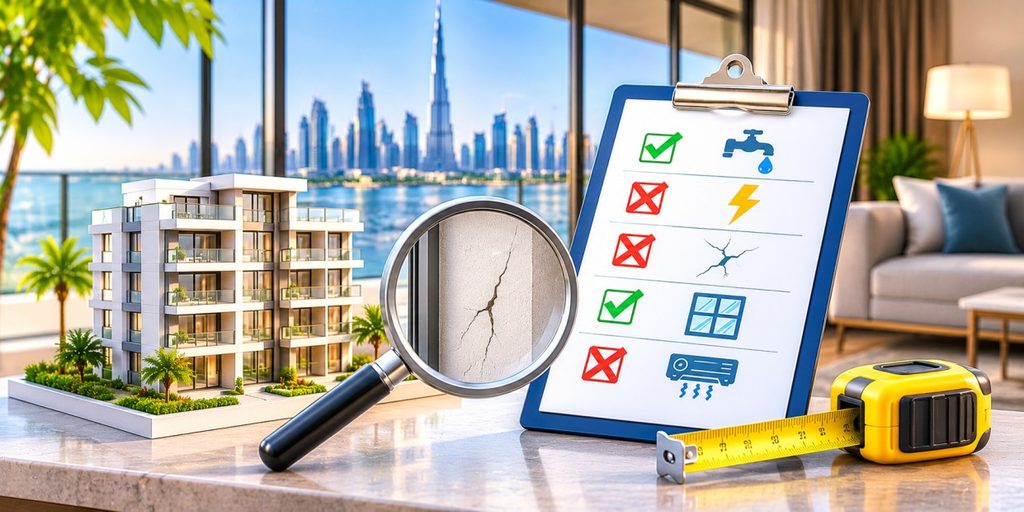
Here are some common mistakes worth avoiding:
1. Inspecting only the visible interiors
A beautiful living room does not guarantee functional plumbing, electrical systems, or air conditioning.
2. Skipping the inspection because the property is newly built
New properties can still have workmanship defects, incomplete installations, or operational issues.
3. Ignoring minor defects
Small issues such as loose fittings or damaged sealants can become more serious if left unattended.
4. Not taking photographs
Without photographic evidence, it may become difficult to establish when a defect was first identified.
5. Accepting verbal repair commitments
Always request written confirmation of outstanding defects and agreed corrective actions.
6. Overlooking ongoing costs
Service charges, cooling fees, utility deposits, and maintenance expenses should be understood before committing to a property.
7. Rushing the handover process
Take sufficient time to inspect the property, read the relevant documents, and clarify any concerns before signing acceptance documents.
Purchasing or moving into a ready-to-move property in Dubai should be an exciting experience, not a source of unexpected repairs and financial stress.
A thorough inspection helps you understand the property’s actual condition, identify potential defects, verify essential facilities, and make informed decisions before accepting possession.
From checking ownership documents and inspecting electrical systems to examining plumbing, air conditioning, building amenities, and service charges, every step contributes to a more transparent property handover.
The most important thing to remember is that a property that looks ready is not necessarily a property that has been thoroughly inspected. Taking the time to verify the details today can help prevent unnecessary inconvenience tomorrow.
At Properties Market UAE, we understand that choosing the right property is about more than finding an attractive apartment or villa. It is about making a confident real estate decision that supports your lifestyle, financial goals, and long-term expectations.
Whether you are searching for a ready-to-move to a new apartment, a family villa, or an investment property in Dubai, our team is here to help you explore suitable real estate opportunities and navigate your property journey.
Looking for your ideal ready-to-move property in Dubai?
Connect with Properties Market UAE today and take the next step towards finding a property that meets your expectations.
Frequently Asked Questions
1. What is a ready-to-move property inspection in Dubai?
A ready-to-move property inspection is the process of checking a completed residential property before accepting possession. It involves examining walls, ceilings, flooring, plumbing, electrical systems, air conditioning, kitchen appliances, windows, doors, and other facilities to identify defects or incomplete work.
2. Is property inspection necessary before buying a ready-to-move to a new Apartment in Dubai?
Yes. Although property inspection is not a substitute for legal due diligence or an official regulatory approval, it is an important precaution before completing a purchase.
It helps buyers identify visible defects, assess the property’s condition, and document issues that may need attention before or after handover.
3. What is a snagging inspection in Dubai?
A snagging inspection is a detailed examination of a property’s condition to identify defects, incomplete work, or installation problems.
It typically includes checking paintwork, flooring, plumbing, electrical installations, air conditioning, windows, doors, and kitchen fittings.
The findings are documented in a snagging report that can be shared with the responsible developer or property representative.
4. Can I hire a professional property inspector in Dubai?
Yes. Buyers and property owners can engage independent property inspection or snagging professionals.
A qualified inspector can help identify defects that may be difficult for an inexperienced buyer to notice.
Before hiring a professional, check their relevant experience, qualifications, insurance where applicable, inspection scope, and report format.
5. How much does a property inspection cost in Dubai?
Property inspection costs vary depending on the property type, size, location, inspection scope, and service provider.
An apartment inspection may require a different level of work compared with a large villa or townhouse.
Request quotations from multiple inspection providers and compare what is included, such as the inspection report, photographs, technical testing, and follow-up inspection.
There is no single fixed inspection fee applicable to all Dubai properties.
6. How long does a property inspection take in Dubai?
The inspection duration depends on the property’s size, layout, condition, and technical requirements.
A small apartment may take less time than a large villa with multiple bathrooms, balconies, outdoor facilities, and extensive installations.
Rather than rushing, ensure that sufficient time is allocated to examine all accessible areas and document any defects.
7. Why should I choose a professional real estate company when purchasing a ready-to-move property?
A professional real estate company can help buyers understand available property options, compare locations, review transaction requirements, and navigate the purchasing process.
An experienced property consultant can also help coordinate communication between buyers, sellers, developers, and other relevant parties.
However, buyers should independently verify legal documentation and engage qualified technical inspectors when necessary.